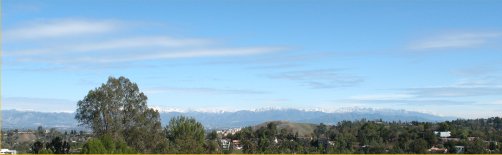
Views from Medina Road
Tuesday, April 13, 2010
Migration
Locusmag.com migrated to a new server today, which is why you may have tried to view the site, early this afternoon west coast time, and seen a fragmentary homepage. The specific problem there was, the new server didn't have the php scripts for displaying the news feed loaded, and the php tags broke the html structure of the rest of the page...
Moving to the new server is roughly like upgrading the server's operating system, and we did this to enable installation of Word Press, with which we plan to host the various blogs, including News, Reviews, and Roundtable, currently run via Blogger, which is abandoning FTP support by the end of the month.
The new server's control panel also provides some new features that I'll be exploring. But the next, immediate, task is to install Word Press and see about migrating the Blogger blogs. More on that soon.
Moving to the new server is roughly like upgrading the server's operating system, and we did this to enable installation of Word Press, with which we plan to host the various blogs, including News, Reviews, and Roundtable, currently run via Blogger, which is abandoning FTP support by the end of the month.
The new server's control panel also provides some new features that I'll be exploring. But the next, immediate, task is to install Word Press and see about migrating the Blogger blogs. More on that soon.
Tuesday, April 06, 2010
Infrastructure Note
There is now a separate Index to Magazine Reviews, including all the magazine and webzine issues reviewed by Lois Tilton in her new column, as well as a handful of magazines covered in reviews run on the website in the early 2000s by Rich Horton, Michael Swanwick, and others. This index will, of course, be updated each time we post a new column from Lois.
References to Lois's reviews are also now included in the 2010 Magazine Directory, which otherwise compiles references to reviews in Locus Magazine, and descriptions in Locus Online's 'Other Magazines' pages.
References to Lois's reviews are also now included in the 2010 Magazine Directory, which otherwise compiles references to reviews in Locus Magazine, and descriptions in Locus Online's 'Other Magazines' pages.
Sunday, March 21, 2010
Light and Dark in Orlando
First, to fill in a couple details from the previous post, Nalo Hopkinson's lunchtime speech referred notably to the Racefail 2009 debate that raged online a year or so ago; she also used the phrase "people of pallor" as a nice parallel to the standard "people of color".
Friday the clouds broke up a bit, and by Saturday the sun returned full-force, just in time for the annual Locus photo of ICFA attendees out by the pool -- the sun was bright enough that we were getting uncomfortable by the time stragglers gathered to make it into the shot. (When the photo appears in Locus Magazine, I'm the one in the bright yellow polo shirt.)
The Friday lunchtime speaker was guest scholar Takayuki Tatsumi, best known for books like Cyberpunk America and the more recent Full Metal Apache. He spoke on "Race and Black Humor", discussing several examples of how racism played in the response to natural catastrophes, like Katrina, and in works of fiction, including a Brian Aldiss story from 1966 called "Another Little Boy" and the Japanese bestseller Japan Sinks... if the talk was a tad arcane, it was leavened by a film clip from a parody of the last title, clips of a worldwide disaster in which everyplace except Japan sinks, that looked like a bad outtake from 2012.
The highlight of Friday evening was another ICFA tradition, the performance/stage reading of three short plays. (The first couple times I attended ICFA, these were written and/or performed by Brian Aldiss, with supporting cast.) This time two of the plays were by Jeanne Beckwith -- "Mission to Mars", with Brett Cox and Andy Duncan portraying two astronauts who've arrived at Mars and whose backup supply ship is overdue; and "The Last Detective", with Jim Kelly, John Kessel, Kij Johnson, and Sydney Duncan as the characters and author of a story, respectively. The final play was "Driving Day" by Timothy Anderson, again starring Brett Cox, a surreal piece that involved cast members circling the room and waving their arms back and forth. They were all fun.
Then folks gathered outside by the pool cabana; it wasn't quite warm enough to be comfortable, and the gas lamps weren't supplied with propane, but we made do. Russell brought out his guitar, Charles produced a bottle of Glenmorangie, and we were fine.
The awards banquet on Saturday evening closed the weekend, and went typically long, with awards presented for service to ICFA, by Sheila Williams to students for the Dell Magazine writing contest (whose recipients included a good Rachel and an evil Rachel), the Lord Ruthven awards for works about vampires, and, eventually, the previously-announced Crawford Award winner, to Jedediah Berry for his The Manual of Detection, as the best first book by a fantasy writer from the past year. As if all those were not enough, it was then announced that two more awards will be presented beginning next year -- one, named after Nalo Hopkinson, for a story by a person of color, and another, named after Suzy McKee Charnas, for some service the nature of which I didn't quite catch. I'm sure Locus mag will get all the details in place in their official coverage of the weekend.
In between all that, I bought a couple books in the book room, bought one book in the silent auction, had some good conversations with people, met Jedediah Berry and Kit Reed and Rebecca Holden and several others for the first time, had a meeting with Liza about prospects for a PDF version of Locus Magazine and options for converting our current Blogger blogs, and attended a reading by Amelia Beamer from her forthcoming novel The Loving Dead, which continued to gather positive buzz throughout the weekend, by Ellen Klages, who read several unpublished passages from her "portable childhood" series, and by Andy Duncan, who read a hilarious story about a man conniving to outrun a bullet.
Now, Sunday morning, it is mostly overcast again, and I'm finishing up here before packing to leave for the airport.
Friday the clouds broke up a bit, and by Saturday the sun returned full-force, just in time for the annual Locus photo of ICFA attendees out by the pool -- the sun was bright enough that we were getting uncomfortable by the time stragglers gathered to make it into the shot. (When the photo appears in Locus Magazine, I'm the one in the bright yellow polo shirt.)
The Friday lunchtime speaker was guest scholar Takayuki Tatsumi, best known for books like Cyberpunk America and the more recent Full Metal Apache. He spoke on "Race and Black Humor", discussing several examples of how racism played in the response to natural catastrophes, like Katrina, and in works of fiction, including a Brian Aldiss story from 1966 called "Another Little Boy" and the Japanese bestseller Japan Sinks... if the talk was a tad arcane, it was leavened by a film clip from a parody of the last title, clips of a worldwide disaster in which everyplace except Japan sinks, that looked like a bad outtake from 2012.
The highlight of Friday evening was another ICFA tradition, the performance/stage reading of three short plays. (The first couple times I attended ICFA, these were written and/or performed by Brian Aldiss, with supporting cast.) This time two of the plays were by Jeanne Beckwith -- "Mission to Mars", with Brett Cox and Andy Duncan portraying two astronauts who've arrived at Mars and whose backup supply ship is overdue; and "The Last Detective", with Jim Kelly, John Kessel, Kij Johnson, and Sydney Duncan as the characters and author of a story, respectively. The final play was "Driving Day" by Timothy Anderson, again starring Brett Cox, a surreal piece that involved cast members circling the room and waving their arms back and forth. They were all fun.
Then folks gathered outside by the pool cabana; it wasn't quite warm enough to be comfortable, and the gas lamps weren't supplied with propane, but we made do. Russell brought out his guitar, Charles produced a bottle of Glenmorangie, and we were fine.
The awards banquet on Saturday evening closed the weekend, and went typically long, with awards presented for service to ICFA, by Sheila Williams to students for the Dell Magazine writing contest (whose recipients included a good Rachel and an evil Rachel), the Lord Ruthven awards for works about vampires, and, eventually, the previously-announced Crawford Award winner, to Jedediah Berry for his The Manual of Detection, as the best first book by a fantasy writer from the past year. As if all those were not enough, it was then announced that two more awards will be presented beginning next year -- one, named after Nalo Hopkinson, for a story by a person of color, and another, named after Suzy McKee Charnas, for some service the nature of which I didn't quite catch. I'm sure Locus mag will get all the details in place in their official coverage of the weekend.
In between all that, I bought a couple books in the book room, bought one book in the silent auction, had some good conversations with people, met Jedediah Berry and Kit Reed and Rebecca Holden and several others for the first time, had a meeting with Liza about prospects for a PDF version of Locus Magazine and options for converting our current Blogger blogs, and attended a reading by Amelia Beamer from her forthcoming novel The Loving Dead, which continued to gather positive buzz throughout the weekend, by Ellen Klages, who read several unpublished passages from her "portable childhood" series, and by Andy Duncan, who read a hilarious story about a man conniving to outrun a bullet.
Now, Sunday morning, it is mostly overcast again, and I'm finishing up here before packing to leave for the airport.
Thursday, March 18, 2010
Overcast in Orlando
I'm in Orlando, attending this year's International Conference on the Fantastic in the Arts, at the conference's new permanent site in Orlando, at the Marriott just north of the airport. It's been overcast, even a bit rainy, the whole time I've been here, a stark contrast to the typically sunny, albeit hot and humid, weather the same time of year in Ft. Lauderdale, the location of the conference until two years ago.
The theme of this year's conference is "Race and the Fantastic", and it's played out in the identities of the guests of honor -- Nalo Hopkinson, Laurence Yep, Takayuki Tatsumi. (Perennial special guest Brian Aldiss is emeritus this year, not in attendance.) The theme hadn't sunk in for me until today's Author Guest of Honor speech by Nalo Hopkinson, who spoke about science fiction and fantasy as a vehicle for addressing the social iniquities brought about by racism, which sounds dry, but the speech wasn't -- most of it consisted of Nalo 'channeling' an alien observer who was confused by various Earth phrases concerning racism and culture, and offering various proposed (hilarious, ironic, bitterly funny) translations. The speech got a standing ovation, is will be worth looking up if and when it's posted or published.
As always with ICFA, the conference is bound by the hotel grounds, with people gathering in the lobby, or bar, or out by the pool, with nowhere else much to go within walking distance. Last night, after arriving at the hotel around 5pm (2pm west coast time), I checked email and worked the magazine listing for the site for a while in my room, before I was ready to eat dinner, at 8 or so, then wandered down to the casual restaurant by the bar, where I was joined by Brett Cox and his wife Jeanne Beckwith; we talked about awards juroring and Facebook and Lost, among other things, over salads and salmon. Later there was an Opening Reception for all attendees, and I said hi to Liza and Amelia (the Locus Magazine contingent) and (or maybe it was in the lobby or elevator) Gary Wolfe and Russell Letson.
The main program at ICFA consists, of course, of graduate students reading academic papers about.., well, about the fantastic in the arts, which most of the time means in literature, but sometimes means in movies and TV and even video games. There are also readings by the 30 or 40 attending authors, and the guest of honor lunches; a book sales room, and a silent auction. I ducked in and out of these throughout the day, in between updating the website and taking a nap (still on West Coast time, staying up too late in the evenings).
After dinner -- at Capital Grille, a high-end steak house, with Liza and Amelia and Gary and Russell and Graham, and Peter Straub and Ellen Klages -- there was a late evening panel back at the con about writers and research, with Peter and Ellen, and Nalo and Stephen Donaldson and Andy Duncan and others, which discussed Google and using the web to contact specialists. Then I hung out in the bar, at a table with Jim and John and Ted, and eventually Brett and Kij and Jebediah (Berry, whom I met earlier in the day for the first time), talking about awards procedures and Jim Gunn's contacts with famous writers over the decades -- some while John (Kessel) was working with him. Lots of stories, about Gordy Dickson, and Ted Sturgeon, and of course Harlan.
Tomorrow Amelia Beamer reads from her new novel The Loving Dead, which seems to be attracting quite the buzz; and Takayuki Tatsumi speaks at lunch.
The theme of this year's conference is "Race and the Fantastic", and it's played out in the identities of the guests of honor -- Nalo Hopkinson, Laurence Yep, Takayuki Tatsumi. (Perennial special guest Brian Aldiss is emeritus this year, not in attendance.) The theme hadn't sunk in for me until today's Author Guest of Honor speech by Nalo Hopkinson, who spoke about science fiction and fantasy as a vehicle for addressing the social iniquities brought about by racism, which sounds dry, but the speech wasn't -- most of it consisted of Nalo 'channeling' an alien observer who was confused by various Earth phrases concerning racism and culture, and offering various proposed (hilarious, ironic, bitterly funny) translations. The speech got a standing ovation, is will be worth looking up if and when it's posted or published.
As always with ICFA, the conference is bound by the hotel grounds, with people gathering in the lobby, or bar, or out by the pool, with nowhere else much to go within walking distance. Last night, after arriving at the hotel around 5pm (2pm west coast time), I checked email and worked the magazine listing for the site for a while in my room, before I was ready to eat dinner, at 8 or so, then wandered down to the casual restaurant by the bar, where I was joined by Brett Cox and his wife Jeanne Beckwith; we talked about awards juroring and Facebook and Lost, among other things, over salads and salmon. Later there was an Opening Reception for all attendees, and I said hi to Liza and Amelia (the Locus Magazine contingent) and (or maybe it was in the lobby or elevator) Gary Wolfe and Russell Letson.
The main program at ICFA consists, of course, of graduate students reading academic papers about.., well, about the fantastic in the arts, which most of the time means in literature, but sometimes means in movies and TV and even video games. There are also readings by the 30 or 40 attending authors, and the guest of honor lunches; a book sales room, and a silent auction. I ducked in and out of these throughout the day, in between updating the website and taking a nap (still on West Coast time, staying up too late in the evenings).
After dinner -- at Capital Grille, a high-end steak house, with Liza and Amelia and Gary and Russell and Graham, and Peter Straub and Ellen Klages -- there was a late evening panel back at the con about writers and research, with Peter and Ellen, and Nalo and Stephen Donaldson and Andy Duncan and others, which discussed Google and using the web to contact specialists. Then I hung out in the bar, at a table with Jim and John and Ted, and eventually Brett and Kij and Jebediah (Berry, whom I met earlier in the day for the first time), talking about awards procedures and Jim Gunn's contacts with famous writers over the decades -- some while John (Kessel) was working with him. Lots of stories, about Gordy Dickson, and Ted Sturgeon, and of course Harlan.
Tomorrow Amelia Beamer reads from her new novel The Loving Dead, which seems to be attracting quite the buzz; and Takayuki Tatsumi speaks at lunch.
Friday, March 12, 2010
Taking Longer than Expected
Quick check-in -- I will be attending next week's International Conference on the Fantastic in the Arts, one of my favorite annual events which unfortunately I missed last year, in Orlando, and perhaps will see some of you there.
Meanwhile, there are some changes upcoming in the structure of the website, because Blogger, with which we host the various blogs (News, Reviews, Perspectives, etc.), has decided to discontinue FTP publishing. That means that until now we have used Blogger to compose and publish posts and have them uploaded directly to the locusmag.com domain, which is done via FTP uploads just as manual updates to the site are done. After May 1st (they've extended the original deadline), Blogger will only support blogs on their own site, though they have released a procedure whereby independent sites can redirect via subdomains to the blogs at Blogger. This means that... instead of seeing the News blog at www.locusmag.com/News/, you may see it at news.locusmag.com. At least that's the plan, from what I understand, thus far.
More as these things develop.
Meanwhile, there are some changes upcoming in the structure of the website, because Blogger, with which we host the various blogs (News, Reviews, Perspectives, etc.), has decided to discontinue FTP publishing. That means that until now we have used Blogger to compose and publish posts and have them uploaded directly to the locusmag.com domain, which is done via FTP uploads just as manual updates to the site are done. After May 1st (they've extended the original deadline), Blogger will only support blogs on their own site, though they have released a procedure whereby independent sites can redirect via subdomains to the blogs at Blogger. This means that... instead of seeing the News blog at www.locusmag.com/News/, you may see it at news.locusmag.com. At least that's the plan, from what I understand, thus far.
More as these things develop.
Thursday, January 21, 2010
When It Rains in California
..It makes national news, apparently. Every five years or so we here in Southern California get a series of storms, one after another, day after day, for a week, that dumps as much precipitation as is usual for most entire years. The last time was 2005; five or six years before that, I recall, I had to prop up a leaning tree in my backyard to keep it from uprooting itself from the mushy ground and falling over into my pool.
This time, though I'm living in a house now on a hillside, there's no such immediate danger, though I am experiencing leaky skylights and window frames. For all that people still complain about weather forecasters, it was cool, earlier this evening, to listen to the TV news and hear the weatherman talk about an especially strong thunderstorm in the Agoura Hills/Calabasas area, and to expect hail in Woodland Hills in about eight minutes. Sure enough, ten minutes later I heard the pelting of hail on the roof.
Several projects and tasks are underway here at Locus Online HQ, including the imminent update of the Locus Index to SF Awards (this weekend, tentatively), and a new section on the website focusing on a 'book of the week' derived from my more-or-less weekly New Books listings. Then, in another week or two, the online ballot for this year's Locus Poll and Survey, which I'm thinking to reformat somewhat from the drop-down menu style of past years, should be posted.
Meanwhile, aside from the website, I've set aside catching up on reading important 2009 novels (Bacigalupi, Robinson, VanderMeer, Miéville, et al, eagerly awaited) to put in my duty as nominator or judge for a couple annual SF awards, which I expect to occupy the next two or three weeks, and which I probably shouldn't say anything more about. Then I'll get back to those novels, and to expanding the SF Awards site with some of those long-anticipated expansions.
This time, though I'm living in a house now on a hillside, there's no such immediate danger, though I am experiencing leaky skylights and window frames. For all that people still complain about weather forecasters, it was cool, earlier this evening, to listen to the TV news and hear the weatherman talk about an especially strong thunderstorm in the Agoura Hills/Calabasas area, and to expect hail in Woodland Hills in about eight minutes. Sure enough, ten minutes later I heard the pelting of hail on the roof.
Several projects and tasks are underway here at Locus Online HQ, including the imminent update of the Locus Index to SF Awards (this weekend, tentatively), and a new section on the website focusing on a 'book of the week' derived from my more-or-less weekly New Books listings. Then, in another week or two, the online ballot for this year's Locus Poll and Survey, which I'm thinking to reformat somewhat from the drop-down menu style of past years, should be posted.
Meanwhile, aside from the website, I've set aside catching up on reading important 2009 novels (Bacigalupi, Robinson, VanderMeer, Miéville, et al, eagerly awaited) to put in my duty as nominator or judge for a couple annual SF awards, which I expect to occupy the next two or three weeks, and which I probably shouldn't say anything more about. Then I'll get back to those novels, and to expanding the SF Awards site with some of those long-anticipated expansions.
Thursday, December 31, 2009
Reading Notes: King, Doctorow, Banks, Kress, Atwood, Wilson, Bear
As the year comes to a close and my plans for semi-detailed reading notes get lost in holiday busyness, let me try a relatively quick summary of reactions to several recent books, just to close out this activity for 2009.
What with December busyness, it took me nearly three weeks to get through Stephen King's Under the Dome, but then it was nearly 1100 pages. King rates as something of a guilty pleasure among my reading priorities; fast, easy, engaging reading, more substantive than bestselling competitors if not substantive enough by genre standards to always rank among any year's SF, fantasy, or horror best. While I've bought every major King volume over the years, I only seem to get around to reading every third book or so. (I did read last year's Duma Key, and liked that just fine too.) Under the Dome has a genuine, if familiar, SF premise at its core, and it exhibits King's tendency to focus plots on commonplace, undereducated, even venal characters, but taking these as givens the book excels in depicting an intricate, inseparable web of plot developments and character interactions that result from the simple premise of the book -- the mysterious 'dome' (actually not as spherical as the cover image depicts or the title suggests) that encapsulates a small Maine town. It resembles Lost, the TV series, in the way that various characters, each with their backstory, responds to a crisis. And would itself serve as the basis for a comparably suspenseful TV series.
More briefly, or I'll never finish:
Cory Doctorow's Makers exhibits the author's usual breezy cleverness and charm, and the first half is fascinating in suggesting how technology will render current markets and business models obsolete. But when this premise runs its course, and subject of the book becomes... theme parks! Theme parks commemorating the good old days of the "maker" technology, which, rather implausibly, become wildly popular, and the entire second half of the book is about two theme park franchises trying to undercut each other, yawn. Still, the style is breezy and the characters smart and wise-cracky; it's fun as the same small cast of characters come and go, part and reunite, usually living together and often sleeping together, like some sort of Heinleinian extended family.
Iain M. Bank's Transition is a recomplicated tale about mysterious manipulators of alternate universes and the agents they hire to do their bidding. It's not an original premise, but what's original here is the treatment, the kaleidoscope view of intersecting characters and timelines and story threads, that takes most of the book to piece together. Highlights are various set pieces and mini-essays, such as one on torture techniques, on Adrian's tastes for various drugs, on solipsism; and scenes with Lady Bisquitine, a character out of an Alfred Bester novel.
Nancy Kress' Steal Across the Sky is by comparison a relatively conventional SF novel with a familiar seeming premise -- aliens have come to Earth and recruited various humans for missions on other planets for some mysterious purpose that involves the aliens 'atoning' for some past sin. The book shifts from planetary adventure in its first third to a sociological study in its middle and a chase thriller toward the end, but a fascinating premise emerges that develops to an abruptly affecting conclusion.
I liked Margaret Atwood's The Year of the Flood better than some genre critics, who quibble over the author's old-fashioned SF sensibilities (the cutesy product names, e.g. AnooYoo Spa, etc.), and perhaps the lack of substantive background explaining the near-future catastrophe (though a similar lack didn't seem to hurt the acceptance in SF of Cormac McCarthy's The Road). As an apocalyptic tale of how 'little people' react to a survive a catastrophe they don't understand, it's substantial and involving, worth reading even if its SF bona fides are spotty.
My favorite SF novel that I've read so far from 2009 is Robert Charles Wilson's Julian Comstock, another book in which the mechanism that transforms now into a degraded future -- here, a 22nd century in which the world economy has collapsed and in the US a religious "Dominion" certifies churches and restricts knowledge of the past -- isn't the focus, compared to the story of individuals living in this future. The story follows the title character and his friend as they are forced to leave their small midwestern town, are drafted into war, emerge into political prominence, and pursue individual passions -- for science, for making movies(!). The book has impressive scope and thematic depth, of special interest for its focus on science vs religious faith (or control), and the way scientific truths, once suppressed, quickly become regarded as fantasy, or myths, or heresy.
And since finishing King, I just read Greg Bear's latest thriller, Mariposa, whose timely plot elements include the collapse of Dubai and the tottering US economy. It's a slick, engaging story that takes a while to piece together (somewhat as in Banks' novel), with a couple sf premises in the mix -- an experimental treatment (Mariposa) for post-traumatic stress disorder that has post-human side effects, and the emergence of successors to computers called 'competers' with the potential to control what humans cannot. The book is more thriller than SF -- the consequences of those sf premises are implied more than explored -- but it's tightly written (especially compared to King!) and quite effective.
What with December busyness, it took me nearly three weeks to get through Stephen King's Under the Dome, but then it was nearly 1100 pages. King rates as something of a guilty pleasure among my reading priorities; fast, easy, engaging reading, more substantive than bestselling competitors if not substantive enough by genre standards to always rank among any year's SF, fantasy, or horror best. While I've bought every major King volume over the years, I only seem to get around to reading every third book or so. (I did read last year's Duma Key, and liked that just fine too.) Under the Dome has a genuine, if familiar, SF premise at its core, and it exhibits King's tendency to focus plots on commonplace, undereducated, even venal characters, but taking these as givens the book excels in depicting an intricate, inseparable web of plot developments and character interactions that result from the simple premise of the book -- the mysterious 'dome' (actually not as spherical as the cover image depicts or the title suggests) that encapsulates a small Maine town. It resembles Lost, the TV series, in the way that various characters, each with their backstory, responds to a crisis. And would itself serve as the basis for a comparably suspenseful TV series.
More briefly, or I'll never finish:
Cory Doctorow's Makers exhibits the author's usual breezy cleverness and charm, and the first half is fascinating in suggesting how technology will render current markets and business models obsolete. But when this premise runs its course, and subject of the book becomes... theme parks! Theme parks commemorating the good old days of the "maker" technology, which, rather implausibly, become wildly popular, and the entire second half of the book is about two theme park franchises trying to undercut each other, yawn. Still, the style is breezy and the characters smart and wise-cracky; it's fun as the same small cast of characters come and go, part and reunite, usually living together and often sleeping together, like some sort of Heinleinian extended family.
Iain M. Bank's Transition is a recomplicated tale about mysterious manipulators of alternate universes and the agents they hire to do their bidding. It's not an original premise, but what's original here is the treatment, the kaleidoscope view of intersecting characters and timelines and story threads, that takes most of the book to piece together. Highlights are various set pieces and mini-essays, such as one on torture techniques, on Adrian's tastes for various drugs, on solipsism; and scenes with Lady Bisquitine, a character out of an Alfred Bester novel.
Nancy Kress' Steal Across the Sky is by comparison a relatively conventional SF novel with a familiar seeming premise -- aliens have come to Earth and recruited various humans for missions on other planets for some mysterious purpose that involves the aliens 'atoning' for some past sin. The book shifts from planetary adventure in its first third to a sociological study in its middle and a chase thriller toward the end, but a fascinating premise emerges that develops to an abruptly affecting conclusion.
I liked Margaret Atwood's The Year of the Flood better than some genre critics, who quibble over the author's old-fashioned SF sensibilities (the cutesy product names, e.g. AnooYoo Spa, etc.), and perhaps the lack of substantive background explaining the near-future catastrophe (though a similar lack didn't seem to hurt the acceptance in SF of Cormac McCarthy's The Road). As an apocalyptic tale of how 'little people' react to a survive a catastrophe they don't understand, it's substantial and involving, worth reading even if its SF bona fides are spotty.
My favorite SF novel that I've read so far from 2009 is Robert Charles Wilson's Julian Comstock, another book in which the mechanism that transforms now into a degraded future -- here, a 22nd century in which the world economy has collapsed and in the US a religious "Dominion" certifies churches and restricts knowledge of the past -- isn't the focus, compared to the story of individuals living in this future. The story follows the title character and his friend as they are forced to leave their small midwestern town, are drafted into war, emerge into political prominence, and pursue individual passions -- for science, for making movies(!). The book has impressive scope and thematic depth, of special interest for its focus on science vs religious faith (or control), and the way scientific truths, once suppressed, quickly become regarded as fantasy, or myths, or heresy.
And since finishing King, I just read Greg Bear's latest thriller, Mariposa, whose timely plot elements include the collapse of Dubai and the tottering US economy. It's a slick, engaging story that takes a while to piece together (somewhat as in Banks' novel), with a couple sf premises in the mix -- an experimental treatment (Mariposa) for post-traumatic stress disorder that has post-human side effects, and the emergence of successors to computers called 'competers' with the potential to control what humans cannot. The book is more thriller than SF -- the consequences of those sf premises are implied more than explored -- but it's tightly written (especially compared to King!) and quite effective.


Still in progress:


Mark R. Kelly
Profile
Email
The opinions expressed in this blog are solely those of Mark R. Kelly, and do not reflect the editorial position of Locus Magazine.
The opinions expressed in this blog are solely those of Mark R. Kelly, and do not reflect the editorial position of Locus Magazine.
Locus
Links
Latest Posts
•
Migration
• Infrastructure Note
• Light and Dark in Orlando
• Overcast in Orlando
• Taking Longer than Expected
• When It Rains in California
• Reading Notes: King, Doctorow, Banks, Kress, Atwoo...
• A Curious Volume of Forgotten Lore
• World Fantasy Con, Wrapup
• Home from World Fantasy Con
• Infrastructure Note
• Light and Dark in Orlando
• Overcast in Orlando
• Taking Longer than Expected
• When It Rains in California
• Reading Notes: King, Doctorow, Banks, Kress, Atwoo...
• A Curious Volume of Forgotten Lore
• World Fantasy Con, Wrapup
• Home from World Fantasy Con
Archives
